Worth Sitting With

Curated conversations, lectures, dialogues, interviews

Before We Begin

A thought worth sitting with.

Not every worthwhile conversation needs to end in agreement, and not every question needs to be settled before it can change the way we see.

Worth Sitting With gathers conversations, lectures, readings, and other voices that have made me stop, listen again, or look more carefully at something I thought I already understood.

Poetry, theology, story, Scripture, beauty, history, science, faith, doubt, and the strange work of imagination all meet here. Some of these voices agree with one another. Some do not. That is part of the point.

We begin with poet Malcolm Guite, whose work repeatedly returns to imagination not as an escape from reality, but as a way of attending to it more fully.

His work leaves us with a question that sits close to the heart of Parabolic Imagination:

What if the world has not lost its wonder so much as we have lost the habits of attention that allow us to notice it?

Malcolm Guite on imagination, enchantment, poetry, and learning to see the world again.

Guite's language is his own, and Pipes, Pints & Poetry will travel its own road. But this feels like a fitting place to begin: with the possibility that poetry and story do not take us away from the real world, but may return us to it with our eyes a little more open.
Skip to Videos
  • Pipes, Poetry and the Hunger for Enchantment
    2026-09-28

    Pipes, Poetry and the Hunger for Enchantment

    This one almost demands inclusion given the name of your own project. Guite moves through pipes, Arthur, Tolkien, Lewis, Aquinas, poetry, story, mystery and the human desire for enchantment.


    Question: Why do stories, poems and old rituals continue to call to us when the modern world insists we have outgrown them?

  • Faith at the Edge of Language
    2026-09-28

    Faith at the Edge of Language

    Poet, former Poetry editor and Yale literature-and-religion professor Wiman speaks especially well to people who inhabit the uneasy country between spiritual hunger, belief and modern doubt.


    Question: Can poetry make room for faith when certainty no longer can?

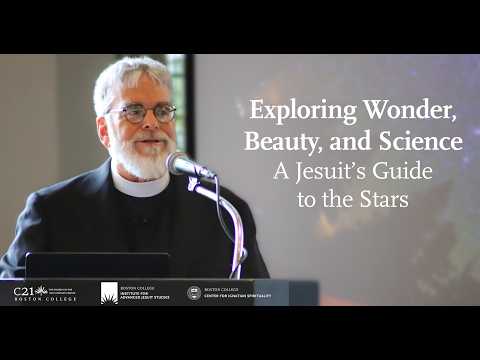
  • The Stars Do Not Become Smaller When We Understand Them
    2026-09-28

    The Stars Do Not Become Smaller When We Understand Them

    The Jesuit astronomer and Vatican Observatory figure moves between astronomy, Job, poetry, creation and the relationship between scientific understanding and wonder.


    Question: If we understand more of what the universe is made of, have we explained away its wonder—or finally learned how astonishing it really is?

  • Before Job Becomes an Answer, Let Him Be a Poem
    2026-09-28

    Before Job Becomes an Answer, Let Him Be a Poem

    Alter approaches Job as a scholar of Hebrew and comparative literature, paying attention to what its poetry actually does rather than immediately turning it into theological propositions.


    Question: What becomes visible when we allow Scripture to remain poetry before asking it to become an explanation?

  • Wrapped in a Cloak of Story
    2026-09-28

    Wrapped in a Cloak of Story

    Shaw works through Arthurian material, fairy tale, Christianity, myth and the old idea that human beings require stories not merely for entertainment but for formation.


    Question: What kind of person might a story slowly teach us to become?

  • Can Catholics and Protestants Read the Same Story Together?
    2026-09-28

    Can Catholics and Protestants Read the Same Story Together?

    Catholic and Anglican biblical thinkers discussing Scripture, interpretation and what their traditions might genuinely share without pretending their differences have disappeared.


    Question: Can Christians read Scripture together deeply enough to discover both what they share and why they still disagree?

  • When Christians Disagree and Stay at the Table
    2026-09-28

    When Christians Disagree and Stay at the Table

    An Orthodox priest-theologian and Protestant theologian discuss their genuine agreements and disagreements rather than reducing one another to caricatures.

    Question: What becomes possible when disagreement is treated as an invitation to understand rather than an argument that someone must win?

  • Has the World Lost Meaning—or Have We Lost Ways of Seeing It?
    2026-09-28

    Has the World Lost Meaning—or Have We Lost Ways of Seeing It?

    This is almost a philosophical companion to Parabolic Imagination: cognitive science beside poetry, with discussion of myth, imagination, participation, modernity and the return of the sacred.


    Question: What if our crisis of meaning comes partly from mistaking information for knowledge—and knowledge for wisdom?

  • The Glory Hidden in Ordinary Things
    2026-09-28

    The Glory Hidden in Ordinary Things

    Novelist and theologian meet around imagination, faith and the strange depth of ordinary human life. Williams' understanding of imagination as discovery rather than invention is especially close to what you are building.


    Question: What if imagination does not take us away from reality, but teaches us to notice more of what is already there?

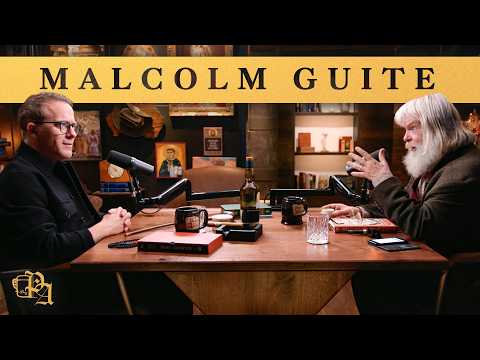
  • When Old Stories Remember What We Forget
    2026-09-28

    When Old Stories Remember What We Forget

    Guite and Pageau move through Arthurian story, imagination, the Grail, materialism, ballad form, tradition, irony and the possibility of recovering enchantment without abandoning reason.


    Question: What might an old story remember that the modern world has taught us to forget?