About Parabolic Imagination
— Old stories are not dead things. They have histories.
Parabolic Imagination is a Christian literary project devoted to receiving the inherited stories of the past and singing them again in long narrative poetry.
It begins with attention: to the story as it has actually come down to us, to its people and places, its strangeness and difficulty, its material world, and the history through which it has travelled.
The aim is neither to preserve the past untouched nor to remake it in our own image, but to ask how an old story may live again without ceasing to be itself.

Why Parabolic?
Jesus often taught through stories: seed in soil, bread at a table, a traveller wounded beside a road, a father watching for a returning child.
A parable does not merely explain an idea. It gives the listener somewhere to stand. People act. Things are lost and found. Money is spent. Bodies are wounded. Doors open or remain shut. Meaning arises through what happens.
Parabolic Imagination takes that narrative seriousness as a governing instinct.
Story comes before explanation.
Matter comes before metaphor.
Persons come before positions.
Consequence comes before consolation.
Theology remains essential, but it enters a world already inhabited by bodies, choices, relationships, history, grief, beauty, work, objects, death, and hope.

The Inherited Story
Much of the work begins with a story already received from somewhere else: Scripture, legend, myth, literature, hagiography, folklore, history, or another chain of transmission.
Before transforming it, I try to establish what has actually been inherited. Which version survives? Through whose translation? What changed in transmission? What remains uncertain? What later retellings have become confused with the earlier source?
Then comes the poetic question:
How may this story live again without ceasing to be itself?
Fidelity does not mean transcription. It means preserving what gives the story its identity—its principal persons, major events, relationships, choices, consequences, difficulties, and ending—while allowing a genuinely new poem to emerge.
The Work
The centre of Parabolic Imagination is long narrative poetry.
Its characteristic form is the modern long-form English narrative ballad: stress-led, rhymed, speakable, flexible enough to carry story across hundreds or thousands of lines.
Story moves. Stress carries. Rhyme remembers. Stanza breathes.
Around the poems are the things that make them possible: historical research, textual study, theological reflection, essays, readings, conversations, and the books that accompany the work.
Fourfold Flame is the first published major work.
Lilith is the current work in progress.
Everything else serves the telling of the story.
Christian Imagination
Parabolic Imagination is explicitly Christian, but it does not require intellectual retreat.
Scripture is foundational. Christ is the measure of divine goodness. Creation is materially real and genuinely good. Grace precedes achievement. Human freedom and responsibility matter. Suffering is not automatically meaningful simply because it occurred.
Historical criticism, textual study, science, philosophy, literary criticism, and difficult evidence are not enemies of faith.
Nor does explanation exhaust reality.
The aim is critical faith without disenchantment; Christian wonder without intellectual retreat.
A tree does not become less astonishing because we understand something of its biology. A manuscript does not become less sacred because its transmission is complicated. A grave does not stop containing the dead because Christians hope for resurrection.
The world need not become less real in order to become wondrous.
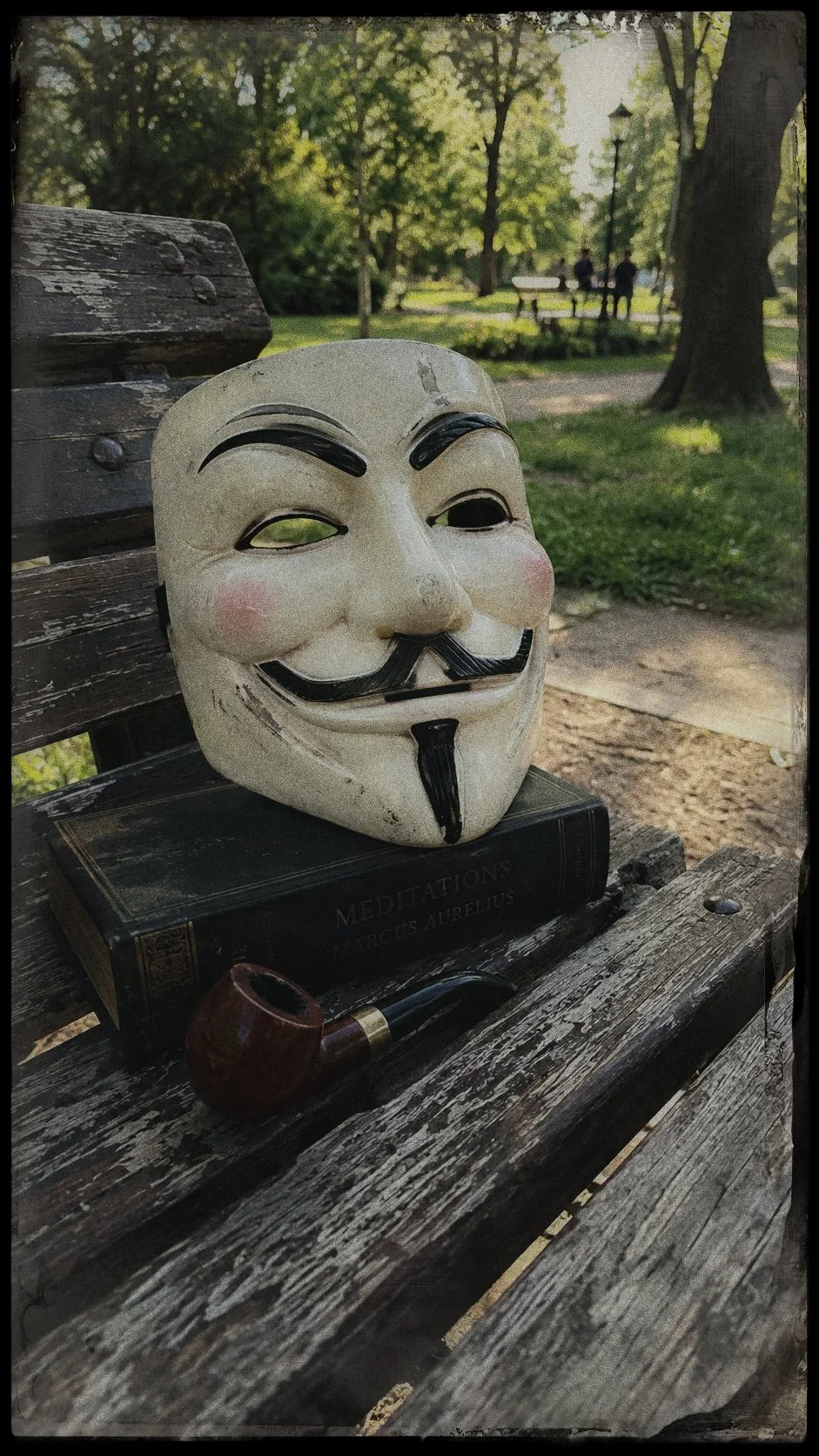
About Lewis
A writer and poet working at the meeting place of inherited story, Christian imagination, literary scholarship, and long narrative verse.
His published work Fourfold Flame retells the Gospel narratives through extended ballad poetry. His current work turns toward the inherited traditions surrounding Lilith and the difficult task of receiving a story shaped by multiple texts, traditions, interpretations, and later reinventions.
Parabolic Imagination grew from a desire to take both faith and imagination seriously without protecting either from history, criticism, ambiguity, grief, or difficult questions.
Much of the work begins with reading: old stories, manuscripts and translations, poetry, theology, history, criticism, and the strange paths by which stories survive.
Then comes the writing.
And, increasingly, the speaking of the work aloud.